

Last Updated: September 2, 2026
Quick Answer
AI voices no longer fail the ear test. They fail the trust test. Listeners sometimes can't pick out a synthetic voice in a blind listen, but favorability drops as soon as they know.
- In a 2026 blind test, listeners could not reliably tell AI from a professional voice actor
- Told the voice was human, 48% viewed the clip more favorably; told it was AI, 20% turned less favorable
- Listeners are more than twice as likely to trust a human voice (55%) over AI-generated content (23%)
- What synthetic voices still miss is interpretation: the choices a performer makes about meaning
The honest answer to "why do AI voices sound fake" is that increasingly they do not. The problem moved. It is no longer about audio artifacts, and understanding where it went tells you when synthetic audio will cost you something.
The Blind Test Result That Changed the Conversation
Crowd React Media tested AI voice technology with 1,326 weekly radio listeners aged 18 to 45 across the United States. Rather than asking opinions about AI, the study played identical station promos voiced either by a professional voice actor or an AI voice, with half the respondents hearing each version and nobody told which (Inside Radio, 2026).
Before the reveal, there were no statistically meaningful differences in listeners' ability to identify what they had heard. The AI voice passed (Inside Radio, 2026).
Anyone still selling the idea that synthetic voices are obviously robotic is working from a version of the technology that is several years old. On short, straightforward copy read in a neutral tone, modern text-to-speech is convincing.
What Happened After the Reveal
The results diverged sharply once listeners were told the source. Among those who learned they had heard a human voice actor, 48% viewed the clip more favorably afterward and only 4% viewed it less favorably. Among those told they had heard an AI voice, 20% became less favorable (Inside Radio, 2026).
"The performance was the same," study author Katie Miller wrote. "The perception shifted dramatically the moment people knew the source" (Inside Radio, 2026).
That aligns with broader audience research. Audacy's Innovation Tracker found people are more than twice as likely to trust a human voice (55%) over AI-generated content (23%) (Audacy, 2024). The audio quality is not what moves those numbers. Knowing a person chose to say it is.
That trust gap now has legal teeth in at least one state - California's SB 1050 requires advertisers to disclose synthetic voices for exactly this reason.
Where Synthetic Voices Still Break Down
Passing a blind test on a 15-second promo is not the same as carrying a project. Four situations still expose the gap:
- Long-form content. Sameness that goes unnoticed for fifteen seconds becomes noticeable across twenty minutes. Human performers vary energy across a session in ways that hold attention. Documentary and narration work rewards an authoritative, confident delivery with dramatic pauses used deliberately, qualities a talent manager for Discovery networks identified as central to the category (Backstage, 2025).
- Emotionally specific lines. Copy that has to land grief, relief, or genuine excitement needs an interpretation of what the line means, not a tone setting.
- Unusual words and names. Brand names, medical terms, and place names are where synthetic reads most often produce something subtly wrong.
- Copy that fights the delivery. When a sentence needs emphasis in an unexpected spot to make sense, a performer catches it and a model reads the obvious stress pattern.
None of this makes synthetic audio worthless. It marks the boundary of where it performs, in a voice over market worth roughly $4.2 billion in 2024 and growing (Market.us, 2024).
The through line is interpretation. A performer decides what a line means before deciding how to say it, and that decision is audible even when listeners can't explain what they are hearing.
The Part Buyers Actually Control
Here is the practical implication. The trust penalty attaches to disclosure, and disclosure is becoming more common rather than less as labeling norms tighten.
That means the risk is not "someone might notice the audio sounds synthetic." It is "someone finds out it was synthetic and feels differently about your brand." Those are different problems with different mitigations, and only one of them gets solved by better models.
The same research pointed to a detail worth holding: listeners are not uniformly hostile to synthetic audio. Overall, 44% reported a positive opinion of AI-generated voices in advertising and media, and they drew distinctions based on use rather than rejecting the technology outright (Inside Radio, 2026). What audiences object to is feeling deceived. Our page on when to use AI versus a human performer sorts projects by exactly that exposure.
What a Performer Brings That a Setting Can't
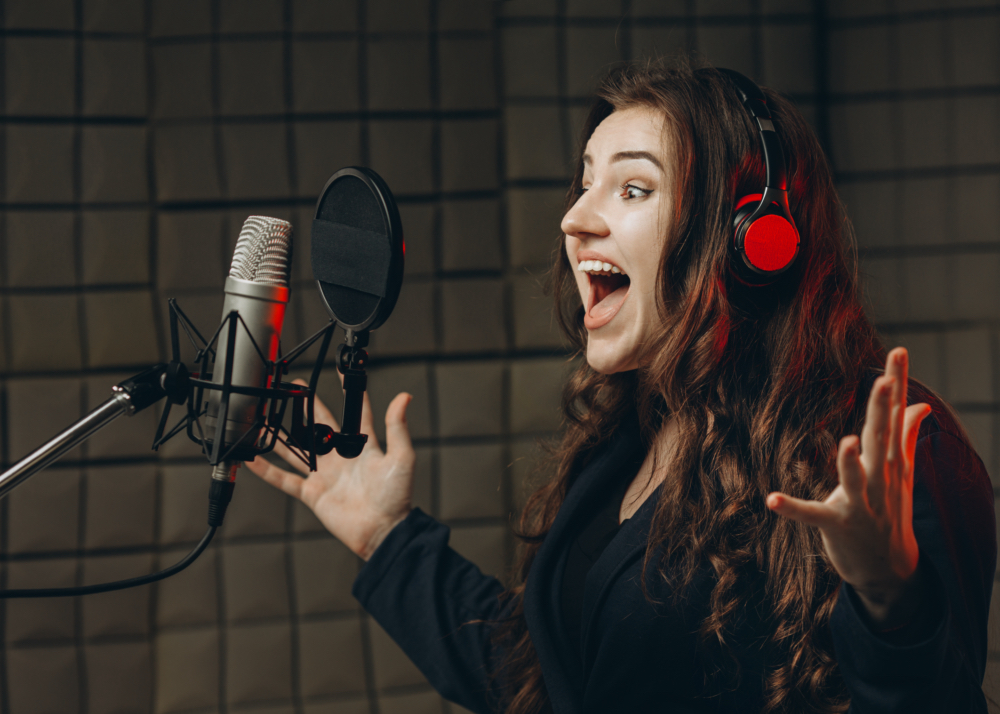
Buyers now favor conversational, authentic reads over the polished announcer sound, because peer-to-peer delivery is more persuasive to modern audiences. Sounding like a real person talking is harder to synthesize than sounding polished, because casual delivery is full of deliberate imperfection.
Direction is the other half. You can ask a performer to hit a different word, read it like they are talking to one friend, or slow down through a phone number, and get an interpretation back rather than a regenerated take. Most reads that miss are direction problems, which is why marking up your script properly matters; our notes on writing a voiceover script cover tone, pace, emphasis, and pronunciation.
Screening matters too. A roster is only as good as what it takes to join it, and what it means to vet voice talent explains what real screening covers.
The Bottom Line
AI voices stopped sounding obviously fake, and pretending otherwise is a losing argument. The 2026 blind test showed listeners could not reliably separate a synthetic voice from a professional voice actor on identical promos. What did not close is the trust gap: disclosure moved favorability up sharply for human reads and down for AI ones, and audiences trust human voices by more than two to one (Audacy, 2024). Synthetic voices still struggle with long-form consistency, emotionally specific lines, unusual names, and copy needing unexpected emphasis. If your audio is public-facing and asks people to believe something, a real performer removes the question entirely. Listen to demos and hear the difference for yourself.
Frequently Asked Questions
Can listeners tell if a voiceover is AI?
Often not in a blind listen. A 2026 study of 1,326 radio listeners found no statistically meaningful difference in their ability to identify a professional voice actor versus an AI voice on identical station promos. The difference appears after disclosure, when favorability shifts against the synthetic version.
Why do AI voices sound flat on longer content?
Sameness that passes unnoticed in a short spot becomes obvious across twenty minutes. Human performers vary energy, pacing, and emphasis across a session to hold attention, while synthetic reads tend toward consistency that turns monotonous. Long-form narration and eLearning are where the gap shows most clearly.
Does it matter if my audience knows the voice is AI?
The research says yes. Told a clip used a human voice actor, 48% of listeners viewed it more favorably against 4% less favorably. Told the same-quality clip was AI, 20% viewed it less favorably. Audiences object less to the technology than to feeling deceived about it.
What do AI voices get wrong most often?
Brand names, medical terminology, and unusual place names are frequent trouble spots, since models apply general pronunciation patterns. Synthetic reads also miss emphasis when a sentence needs stress in an unexpected place to make sense, because that requires deciding what the line means first.
Are AI voices good enough for advertising now?
They can match human performance in blind listening, but advertising depends on trust rather than audio quality alone. Since favorability drops when listeners know a spot used synthetic audio, and voice talent is a small fraction of total campaign cost, most advertisers get better returns from a real performer.
How does directing a person differ from prompting a model?
Prompting adjusts parameters and regenerates until something lands close enough. Directing describes intent and gets an interpretation back, often better than what was asked for. A performer can take a note about one word in one line and change only that, which no setting reliably reproduces.